

Where to Find Replacement Health Coverage After Leaving Your Job
Jan 2026 - Written by Krista DeKuyper

Key Takeaways
If your employer health benefits are ending, you don’t have to go without coverage. You can replace your coverage with private conversion health plans from insurers like Manulife, Blue Cross, or Sun Life.
Conversion health insurance lets you replace your coverage without re-qualifying medically.
You should reassess your coverage needs (usage, costs, doctors, prescriptions) before committing to a new plan.
Conversion plans must be applied for within 30–90 days after your employer coverage ends.
Our quote comparison tool is a great way to…
Compare conversion health insurance plans instantly
See pricing in one place
Skip manual research and start applying immediately
Frequently Asked Questions
-
Private health coverage is insurance you purchase independently to help cover healthcare costs not included under provincial plans, such as prescription drugs, dental care, vision care, paramedical services, and travel insurance.
In Canada, it’s often used to fill gaps left by OHIP or other provincial coverage.
-
Replacement health coverage is health and dental benefits you get privately to replace an employer-sponsored plan, typically after leaving a job. In the insurance industry, replacement health coverage is formally known as conversion health insurance plans.
-
Yes, private health coverage can be worth it if you regularly pay out of pocket for prescriptions, dental care, vision services, or extended health benefits.
It helps reduce unexpected healthcare expenses and provides predictable costs through monthly premiums.
Learn more in our detailed guide on whether private health insurance is worth it.
-
If you choose not to replace your work’s health coverage and rely on provincial coverage, you may have to pay out-of-pocket for:
Prescription drugs
Dental services, if you don’t qualify for the CDCP:
Preventative care (cleanings, exams, X-rays)
Restorative procedures (fillings, crowns, root canals)
Orthodontics
Vision care, including eye exams for adults, glasses, and contact lenses
Paramedical services, such as massage therapy, physiotherapy, chiropractic care, psychology, and naturopathy
Medical equipment and supplies, like orthotics, hearing aids, CPAP machines, or mobility aids
Travel medical insurance, which is not included under provincial plans if you leave Canada
-
No. For conversion plans, you must apply within a set period (30 to 90 days) after your group benefits end. If you miss this window, you’ll need to apply for a regular private health plan instead.
-
A conversion plan is a smart option when retiring because you can maintain coverage without worrying about denials or exclusions from a pre-existing medical condition.
It provides continuity of benefits, especially for prescription drugs, which are costly but become more important for aging adults.
-
No. Conversion plans do not require medical underwriting.
Acceptance is guaranteed as long as you apply within the required timeframe after leaving your group plan.
-
A conversion plan allows you to move from an employer group plan to an individual plan without medical underwriting, meaning you can’t be declined due to health conditions.
Regular private health plans may offer more customization and lower premiums but usually require medical questionnaires and approvals.

How Long Do Health Benefits Last After Leaving a Job in Canada?
You should check your specific policy, but most employer-sponsored benefit plans end on:
Your final working day
The end of your final pay period
The last day of the month in which your employment ends
Does the reason for leaving matter?
Yes, the reason for leaving may affect how long your benefits last before they expire.
If you are laid off, benefits will usually continue for a limited time.
In the case of termination without notice, coverage may stop right away.
Some employers maintain coverage through the statutory or working notice period.
Important Steps to Take After Leaving Your Job
As soon as you know you’re leaving, review the following:
Your official end date of employment and the exact date your benefits expire
Deadlines for submitting claims for any recent medical or dental expenses
Conversion health insurance plans, including whether you can transition to an individual policy without medical underwriting.
I’m Losing Employee Health Benefits and Need Replacement Coverage
If your employer-sponsored health insurance is ending, you don’t have to go without coverage. Losing employee benefits allows you to explore replacement health coverage options outside your employer plan.
Insurance providers like Manulife, Blue Cross, and Sun Life also offer conversion health insurance plans, allowing you to smoothly transition from a employer-sponsored plan without temporarily losing coverage.
Step 1: Did Your Job Benefits Meet Your Needs?

This is your chance to step back and reassess what private health coverage you actually need. Before choosing your next plan, consider:
Did you utilize your health benefits often?
Were you okay with your deductibles, limitations, and out-of-pocket costs?
Could you access the doctors and hospitals you wanted?
Did your plan cover your prescriptions and ongoing care needs?
Was the cost reasonable for the level of coverage provided?
Step 2: Choosing Your Next Coverage Option

You have 3 options for continuing with private health coverage:
Stay With the Same Plan —If you were satisfied with your employer-sponsored plan and want to keep similar benefits, conversion health insurance can allow you to continue coverage without changing plans or providers.
Upgrade to a Better Plan —Private health coverage can offer improved benefits, broader networks, or plans better suited to your situation.
Switch to a More Affordable Plan — If lowering your monthly cost is the priority, there are private health coverage options designed to reduce premiums and out-of-pocket expenses.

Skip This and Get a Quote Right Now
Compare private health plans and see instant pricing in one place.
Replacement Health Coverage Options After Leaving a Job: Conversion Plans
What is Conversion Health Insurance?
Conversion health insurance allows you to move from an employer-sponsored health plan to an individual private health plan without needing to re-qualify medically.
When your employer health benefits end, conversion health insurance is one of the most direct ways to maintain private health coverage. These plans are designed specifically for people transitioning off a group or employer-sponsored plan.
Explore some of the top conversion health plans below.
Do I Qualify?
You may qualify for conversion health insurance if:
You are losing employer-sponsored health benefits
Your group plan is ending due to job loss, retirement, or change in employment
You apply within the insurer’s required timeframe after coverage ends (30-90 days)
Manulife’s Conversion Plan: Manulife FollowMe Basic
Manulife’s conversion health insurance plan is known as Manulife FollowMe, available in Basic, Enhanced, Enhanced Plus, and Premiere. Basic is the most affordable option. Below is the standard private health coverage is offered in the Manulife FollowMe Basic Plan*.
| Plan Name | Manulife FollowMe Basic |
|---|---|
| Cost | $98–$115 per month |
| Prescription Drugs |
80% coverage up to $500 per year. Included: Generic prescription drugs; diabetic supplies (test strips, syringes, lancets). Excluded: Brand-name drugs, birth control drugs and devices, fertility drugs, anti-obesity drugs, erectile dysfunction drugs, medical cannabis, smoking cessation aids, over-the-counter drugs, diabetic monitoring devices (including continuous and flash glucose monitors, sensors, and transmitters). |
| Vision |
$150 every 2 years for vision care. $60 every 2 years for routine eye exams. Included: Prescription eyeglasses (lenses and frames), contact lenses, laser eye surgery, routine eye exams. Excluded: Safety glasses or non-prescription sunglasses, eyewear cleaning supplies, repairs and accessories, services not covered by government health insurance. |
| Hospital |
Semi-private hospital room. 50% coverage for the first 150 days per year (up to $87.50 per day). |
| Registered Specialists & Therapists |
80% coverage up to $400 combined per year for: Acupuncturist, Chiropodist, Chiropractor, Dietitian, Massage Therapist, Naturopath, Osteopath, Physiotherapist, Podiatrist. Psychologists, Psychotherapists, Clinical Counsellors, and Speech Therapists: $65 per visit, up to 10 visits (combined). |
| Additional Health Coverage |
Accidental dental: $2,000. Ambulance (air or ground): Unlimited. Custom-made orthotics: $250. Hearing aids: $300 every 5 benefit years. |
| Home Care & Medical Supplies |
Personal Support Workers: $500. Nursing (RN, RPN, LPN): $1,000 combined. Medical equipment, prosthetics, and supplies: Amount varies by benefit, including breathing aids (CPAP/APAP, oxygen), hospital beds, mobility aids, prosthetics, and related supplies. |
*Your plan’s coverage details may look different. Coverage can change depending on what was offered in your employer-sponsored health benefits.
Manulife FollowMe Basic vs. Enhanced vs. Enhanced Plus vs. Premiere: Comparison Table
If Manulife FollowMe Basic doesn’t match the benefits you had before or doesn’t provide the private health coverage you’re looking for, consider upgrading to an Enhanced, Enhanced Plus, or Premiere Plan. Below is a comparison table that directly compares the private coverage offered by all four plans*. Keep in mind that upgrading will result in a higher monthly premium.
| FollowMe Basic | Enhanced | Enhanced Plus | Premiere | |
|---|---|---|---|---|
| Prescription Drugs | 80% up to $500/year (generic only) | 80% up to $1,500/year | 80% up to $1,500/year | 80% up to $2,800/year |
| Vision | $150 every 2 years + $60 eye exam | $200 every 2 years + $60 eye exam | $200 every 2 years + $60 eye exam | $300 every 2 years + $60 eye exam |
| Dental | Accidental dental $2,000 | Accidental dental $2,500 | 80% up to $1,000 (Year 3+) | 80% up to $1,500 (Year 3+) |
| Hospital | Semi-private, 50% up to $87.50/day | 100% first 60 days, then 50% | 100% first 60 days, then 50% | Semi-private or private, 100% first 100 days |
| Paramedical | $400 combined | $600 combined | $600 combined | $650 combined |
| Hearing Aids | $300 / 5 years | $400 / 5 years | $400 / 5 years | $600 / 4 years |
| Home Care & Nursing | PSW $500, Nursing $1,000 | PSW $750, Nursing $2,000 | PSW $750, Nursing $2,000 | PSW $1,000, Nursing $3,000 |
| Travel (Optional) | Add-on available | $5M / 15 or 30 days | $5M / 15 or 30 days | $5M / 15 or 30 days |
| Manulife Vitality | Included | Included | Included | Included |
*Your plan’s coverage details may look different. Coverage can change depending on what was available in your group health benefits.
Blue Cross’s Conversion Plan: Blue Choice
Manulife’s conversion health insurance plan is known as Blue Choice. Blue Cross offers conversion plans all across Canada, but coverage levels and benefits vary by province. The private health coverage Blue Cross offers may look different depending on the group plan you were under before.
| Monthly Cost | $73–$80 per month |
|---|---|
| Prescription Drugs |
75% coverage for prescription drugs. Annual maximum: $1,500. |
| Practitioner I Services |
75% coverage up to a combined total of $450 per year. Up to $35 per visit: Athletic therapist, chiropractor, occupational therapist, physiotherapist, podiatrist. Up to $50 per visit: Registered clinical psychologist, counsellor, or social worker (MSW or RSW). |
| Practitioner II Services |
75% coverage up to a combined total of $300 per year. Includes acupuncturist, foot care nurse (max $25/visit), homeopath, naturopath, nutritional counsellor, osteopath, and registered massage therapist. |
| Hearing Aids | Coverage of $500 every five years. |
| Medical Equipment | 75% coverage for eligible equipment including CPAP and breathing equipment, crutches, splints, casts, hospital beds, walkers, wheelchairs, wigs, and other special equipment. |
| Dental – Preventative |
75% coverage up to $1,000 per year (combined with restorative). Includes checkups, cleanings, fillings, extractions, root canals, and surgery. |
| Dental – Restorative |
50% coverage up to $1,000 per year (combined with preventative). Includes crowns, bridges, inlays, and dentures. |
| Vision Care | $150 combined every two years for eye exams and the purchase or repair of frames and/or lenses, including contact lenses. |
| Ambulance |
100% coverage for emergency ambulance services within Canada. Includes treatment with no transport, medical transfer up to $500 lifetime, and emergency air ambulance up to $5,000 per trip ($10,000 per person per year). |
| Hospital |
100% coverage for a semi-private room, or $20 per day in lieu if unavailable (up to 30 days). Includes hostel accommodation when treatment or diagnostic testing is required more than 60 km from home. |
Comparing Plans Made Easy — Get a Quote Right Now
Explore private health coverage options available across Canada
Sun Life’s Conversion Plan: Sun Life Choices
Sun Life’s conversion health insurance is offered through the Sun Life Choices Plan. Below is an overview of the standard private health coverage offered under the Sun Life Choices Plan, but your plan may look different depending on the group plan you were under before.
| Monthly Cost | $120-$150 per month |
|---|---|
| Drugs |
80% reimbursement $500 annual maximum Up to $5.00 paid towards dispensing fee on prescriptions |
| Supplemental Health Care |
80% reimbursement Hearing Aids: $300 maximum every 5 years Accidental Dental: 2,000 per fracture or injury Ambulance: Ground ambulance service, No coverage for air ambulance In-home nursing: $2,500 annual maximum and a $20,000 lifetime maximum combined with medical equipment and services |
| Vision |
100% reimbursement $150 maximum every 2 years, including $50 maximum per eye exam Included: Prescription eye glasses, Prescription contact lenses, Prescription sunglasses, Laser eye surgery |
| Paramedical practitioners |
Chiropractors, including 1 x-ray examination per calendar year Registered massage therapists Naturopaths and acupuncturists Osteopaths, including 1 x-ray examination per calendar year Physiotherapists Podiatrists or chiropodists, including 1 x-ray examination per calendar year Psychologist/social worker Speech language pathologists |
| Semi-private hospital room |
50% reimbursement $5,000 annual maximum |
| Dental – Preventative Only |
80% reimbursement $700 annual maximum Included: Examinations and diagnosis, Tests, x-rays, and lab exams, White fillings, Scaling and extractions, Recall visits every 9 months, Minor emergency treatment |
Manulife vs. Blue Cross vs. Sun Life
Who Has the Best Conversion Health Insurance Plan?
| Category | Manulife FollowMe Basic | Blue Choice Conversion | Sun Life Choices |
|---|---|---|---|
| Monthly Cost | $98–$115 | $73–$80 | $120–$150 |
| Prescription Drugs | 80% up to $500/year (generic only) | 75% up to $1,500/year | 80% up to $500/year Dispensing fee up to $5 |
| Dental Coverage | Accidental dental up to $2,000 | Preventative & restorative Up to $1,000/year (combined) |
Preventative only 80% up to $700/year |
| Vision Care | $150 every 2 years + $60 exam | $150 every 2 years (combined) | $150 every 2 years Includes eye exam |
| Paramedical | 80% up to $400/year | $450 Practitioner I $300 Practitioner II |
80% reimbursement |
| Hospital | Semi-private 50% up to $87.50/day |
Semi-private up to 30 days | Semi-private 50% up to $5,000/year |
| Ambulance | Air & ground — unlimited | Air & ground (limits apply) | Ground only |
| Other Coverage | Hearing aids $300 / 5 yrs Orthotics $250 |
Hearing aids $500 / 5 yrs Medical equipment 75% |
Hearing aids $300 / 5 yrs In-home nursing $2,500/year |
Manulife FollowMe
Pros:
Ambulance: Best overall, includes air and ground ambulance with unlimited coverage.
Vision: Strong, with $150 every 2 years + $60 eye exam.
Monthly Premium: Decently affordable but not the cheapest option.
Cons:
Dental: Weakest, only accidental dental up to $2,000.
Hospital: Weakest among the three. Only 50% up to $87.50/day (150 days).
Paramedical: Lowest overall limit (80% up to $400/year).
Best For:
People who want solid basic private health coverage with emergency protection and predictable benefits, but don’t need extensive dental or prescription coverage.
Blue Cross Blue Choice
Pros:
Lowest cost: Best value with the lowest monthly premium.
Prescription drugs: Strongest drug coverage with 75% up to $1,500/year.
Dental: Strongest dental coverage with preventative + restorative benefits.
Paramedical: Strongest paramedical with separate practitioner limits.
Other benefits: Stronger hearing aid and medical equipment coverage.
Cons:
Vision: Weakest vision structure (exam + lenses combined into one $150 benefit).
Best For:
People looking for the most affordable conversion health insurance with dental benefits and higher drug coverage, while accepting more limited vision coverage.
SunLife Choices
Pros:
Hospital: Strongest hospital coverage — 50% up to $5,000/year.
Vision: Strongest vision benefits (includes eye exams up to $50).
Other coverage: Unique in-home nursing up to $2,500/year, not offered by the others.
Cons:
Cost: Highest monthly premium.
Prescription drugs: Weakest drug cap (dispensing fee limit).
Ambulance: Ground only, no air ambulance.
Best For:
Individuals who want hospital support and home-care benefits and are comfortable paying a higher premium for additional services beyond core coverage.
How to Choose the Right Replacement Health Coverage
Identify Your Must-Have Benefits
Ask yourself:
Do you need prescription drug coverage?
Do you require paramedical services (physio, chiro, massage)?
Is dental coverage important?
Do you travel often and need travel coverage?
What coverage would you be willing to sacrifice for a lower premium or higher coverage elsewhere?
Check Limits and Caps
When browsing plans, keep an eye out for:
Maximum annual coverage amounts
Visit limits (ex. 10 therapy visits per year)
Prescription drug caps and exclusions
Specific exclusions or coverage that requires pre-approval
Compare What You’re Already Using
Think about your current usage and ask yourself:
How often do you use prescriptions?
Do you have ongoing therapy or specialist visits?
Do you need frequent vision or dental care?
Are there any areas of coverage you find yourself not using (either because it’s not needed or because it’s covered by provincial health plans)?
Balance Cost vs Coverage
Many assume they’re saving money with a cheaper plan, but that’s not always the case.
If your monthly premium is low but the plan has limited benefits, you may end up paying more out-of-pocket later. The best plans balance affordability with comprehensive coverage.
Use Our Free Quote Comparison Tool
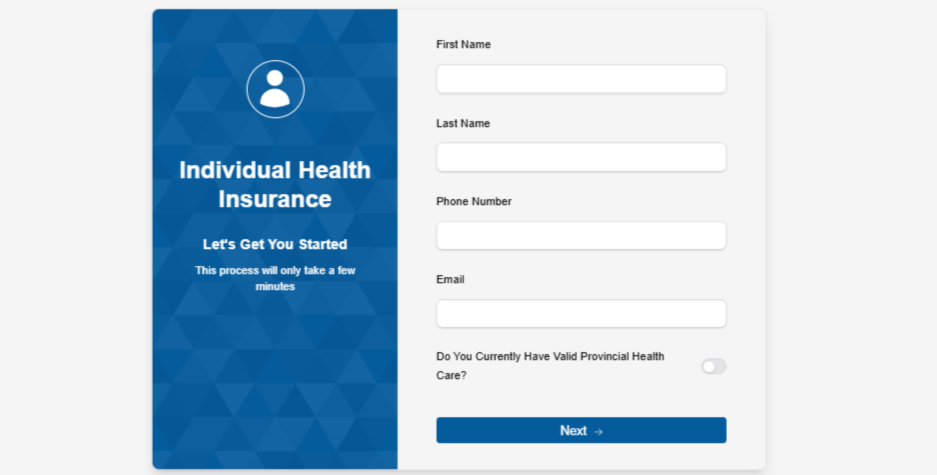
Find the plans you’re looking for instantly. Instead of contacting multiple insurers separately, you can compare several plans in one place with our Health Quote Comparison Tool. The tool is completely free-to-use and helps you compare coverage and pricing side-by-side, so you can make an informed decision without the stress.
How to Switch Private Health Insurance Providers in Canada
When your employer benefits end, the biggest risk is a gap between plans. That’s when unexpected medical costs can hit hardest. Here’s how to switch private health insurance providers and avoid gaps in coverage:
Apply for a Conversion Plan Immediately
Most insurers require you to apply within 30–90 days after your employer plan ends. If you miss the window, you may lose eligibility and/or be required to answer medical questions for certain plans.
Don’t Wait Until Your Last Day
Don’t wait until the last minute to apply. Processing your application will take time. Apply as soon as you can. You can request a specific start date if you don’t want coverage to start too early.
Keep Proof of Your Employer Coverage
Insurers may ask for documentation of your previous plan (coverage dates, benefits, etc.). Keep your plan summary handy. Being prepared will significantly speed up the application process and ensure you get coverage as soon as you need it.
Confirm Your Effective Coverage Date
Ask your employer or someone from HR for the official date in which your group benefits end. Make sure your new plan starts before or on the same day your employer coverage ends.
Find and Compare Private Health Coverage Now
Easily find private health plans from top providers across Canada